



Each new account produces a digital profile containing identity details, financial activity and device records. The 1xBet Privacy Policy explains how this information is collected, processed, retained and disclosed during registration, betting, payments and communication with support. More than 400,000 users are listed in the available platform data, making systematic information management important for security and regulatory compliance.
The document defines individual privacy rights, permitted processing purposes and the obligations of the 1xBet Betting Company. It also describes possible action following misuse, unauthorised access or submission of false details. Reviewing these provisions helps account holders understand which records may be requested and why additional checks sometimes occur.
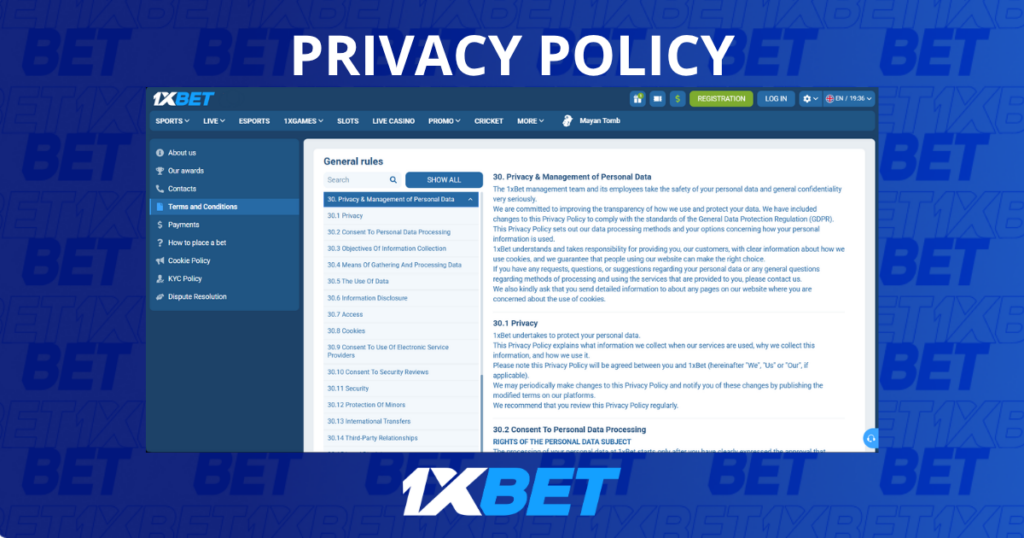
Personal Data Access Rules
Personal details are classified as restricted information and may be processed only for a defined operational, legal or protective purpose. Internal procedures limit access according to an employee’s role and assigned duties. Authorised contractors receive only the details required to complete a specific service.
A security review may begin when registration information is incomplete, an uploaded document contains discrepancies or a transaction differs significantly from previous activity. The betting platform applies several core principles:
- Staff access is limited by assigned responsibilities.
- Identity and payment details may be checked during fraud reviews.
- Technical logs record suspicious sessions and repeated login attempts.
- Contractors must follow confidentiality requirements.
- Disclosure to public authorities requires a valid legal basis.
- Account holders must keep passwords inaccessible to third parties.
No online service can guarantee complete protection against every threat. Procedures may therefore be changed when new risks appear or regulatory duties are revised. The 1xBet Betting Company can also restrict selected functions while unusual activity is examined.
Data Collection and Processing
Information enters the system during registration, verification, financial operations, support requests and use of website or application features. The amount collected depends on the services selected and the checks required for a particular action.
| Data category | Typical examples | Processing purpose |
| Identification | Full name, birth date, document details | Age and identity checks |
| Contact | Email address, telephone number | Notifications and security alerts |
| Address | Residential or registered address | Compliance review |
| Payment | Selected method, limited billing details | Deposits, withdrawals and refunds |
| Transactional | Bets, winnings, balance movements | Account management and dispute checks |
| Technical | IP address, device type, session logs | Diagnostics and fraud detection |
These details support six common tasks: account creation, payments, KYC and AML checks, customer assistance, risk control and service analysis. Three general cookie categories may also be used: session-based, persistent and analytical. Each category serves a different technical or statistical function.
Retention does not follow one universal period. A record remains available only while required for operational needs, contractual obligations or applicable law. Access may also be granted to banks, payment processors, verification providers or authorised public bodies where a lawful basis exists.

Data Protection Measures
Several protective layers are required because one profile may combine identity, payment and behavioural details. Their purpose is to prevent unnecessary access, identify irregular activity and preserve an accurate financial history.
The main safeguards include:
- Document checks against submitted registration details.
- Monitoring of unusual deposits and withdrawal requests.
- Session logging for device access and technical incidents.
- Role-based permissions for employees.
- Confidentiality duties for external service providers.
- Temporary account limits during an investigation.
- Internal procedures for suspected disclosure or intrusion.
An account holder may ask for access to stored information or request correction of an inaccurate entry. Depending on applicable law, blocking, restriction or deletion may also be available. Consent can be withdrawn when it forms the legal basis for processing.
Approval of a request does not always mean immediate removal. Certain records may need to remain available for AML checks, financial reporting, fraud investigation or dispute resolution. Identity confirmation is normally required before protected details are shown, amended or erased.
Liability for Policy Breaches
Responsibility is assessed according to the cause of an incident, the type of information affected and the relevant contractual or legal requirements. No single monetary fine applies to every privacy violation.
| Responsible party | Example of misconduct | Possible consequence |
| User | Sharing login credentials or providing false details | Additional checks, restricted access or suspension |
| User | Using another person’s identity or payment data | Transaction review, closure or official referral |
| Company or contractor | Unauthorised processing or disclosure | Investigation, corrective measures and legal liability |
| External party | Attempted intrusion or information theft | Access blocking, evidence preservation and reporting |
Confirmed misconduct by an account holder may result in delayed transactions, limited functions or permanent closure. Serious incidents can be reported to regulators or law-enforcement agencies.
Where the company or its contractor caused the incident, the 1xBet Betting Company must examine the circumstances and apply suitable corrective action. Compensation is not issued automatically. Any claim depends on documented loss, proven causation, governing law and the applicable contractual provisions.